
Illustrative workflow: Northstar Cloud, Acme Stack, the changes, counts, and confidence scores below are fictional.
1. Choose competitors and signals
A product lead starts with three competitors and a question: are their packaging and integration choices changing? The watch combines relevant market news with the official pages selected for monitoring.
Keep the scope narrow: a pricing page, product changelog, and integration directory are easier to review than every mention of a company.
2. Review what changed
In this scenario, Northstar Cloud changes pricing language and adds an integration category. The analyst reviews the recorded changes together, rather than treating each mention as a separate market event.
The change is an observation. Whether it affects existing customers is still an open question.
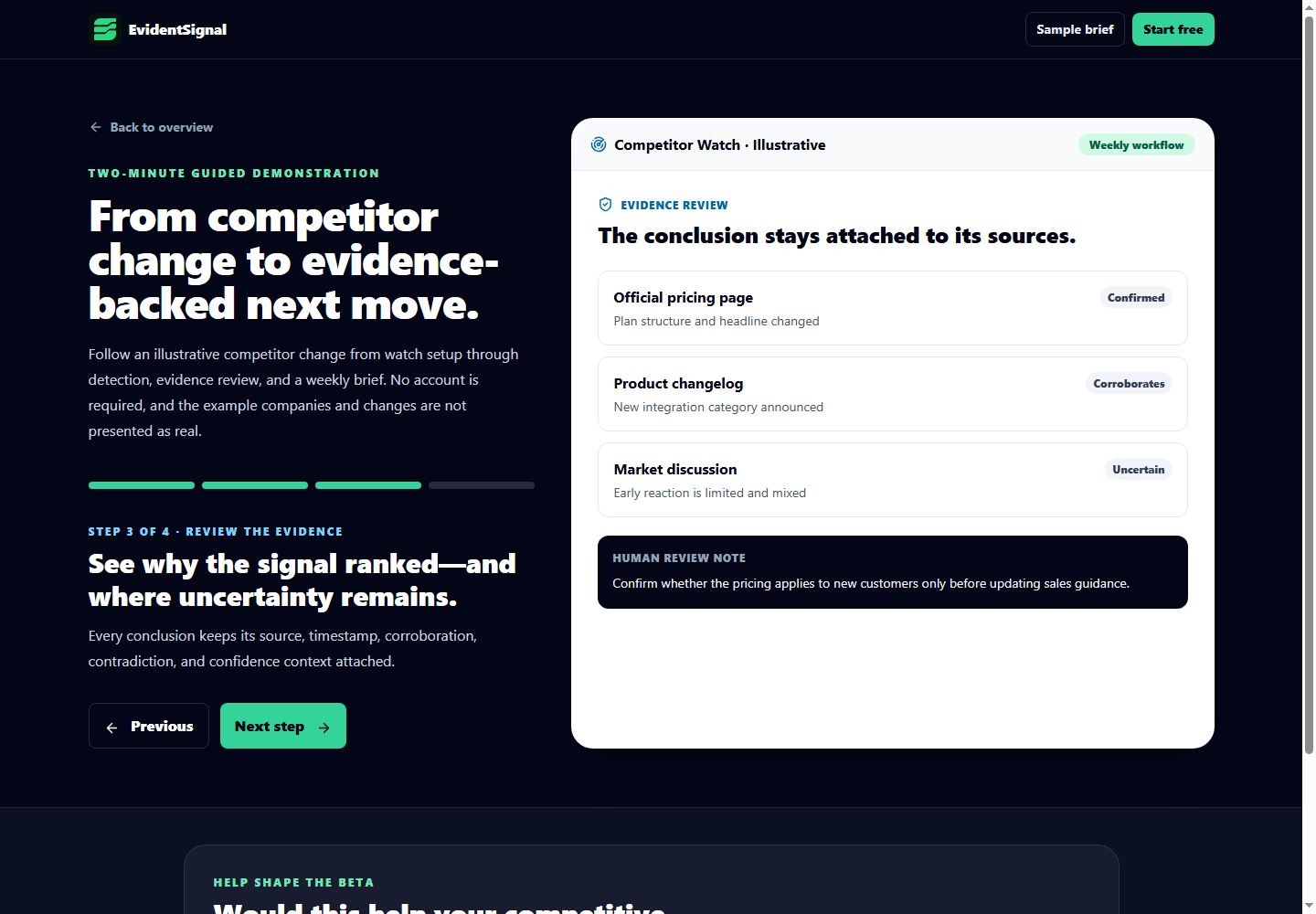
3. Check the evidence before drawing a conclusion
Compare the official pricing page with the changelog. Record when each source was observed, what it supports, and what it leaves uncertain. A discussion thread can describe reactions, but it does not establish the competitor’s contract terms.
The analyst’s next step is to verify customer eligibility before changing sales guidance.
4. Build the weekly competitor brief
The brief separates the confirmed change, possible business impact, and recommended follow-up. Each finding keeps its source attached, and each next step gets an owner and a due date.
Read a complete first-party sample brief, or use the downloadable brief template for your own market.